The Truth About PR: How Long It Really Takes to See Media Coverage
Let’s clear something up: PR is not Amazon Prime. You don’t hit “publish” on a press release and wake up to a headline in Forbes two days later.
One of the most common questions we hear at LINC Detroit is: “How long will it take to get media coverage?”
And the honest answer is, it depends. Not just on your business, but on your story, your goals, the timing, and whether what you’re pitching is actually newsworthy.
So let’s break it down.
What Makes Something Newsworthy?
When I taught PR, I used to ask students: “Would this story matter to anyone outside of your company?”
Newsrooms don’t care that you launched a new website or promoted a team member unless there’s a larger story attached. So how do you know if what you have is actually newsworthy?
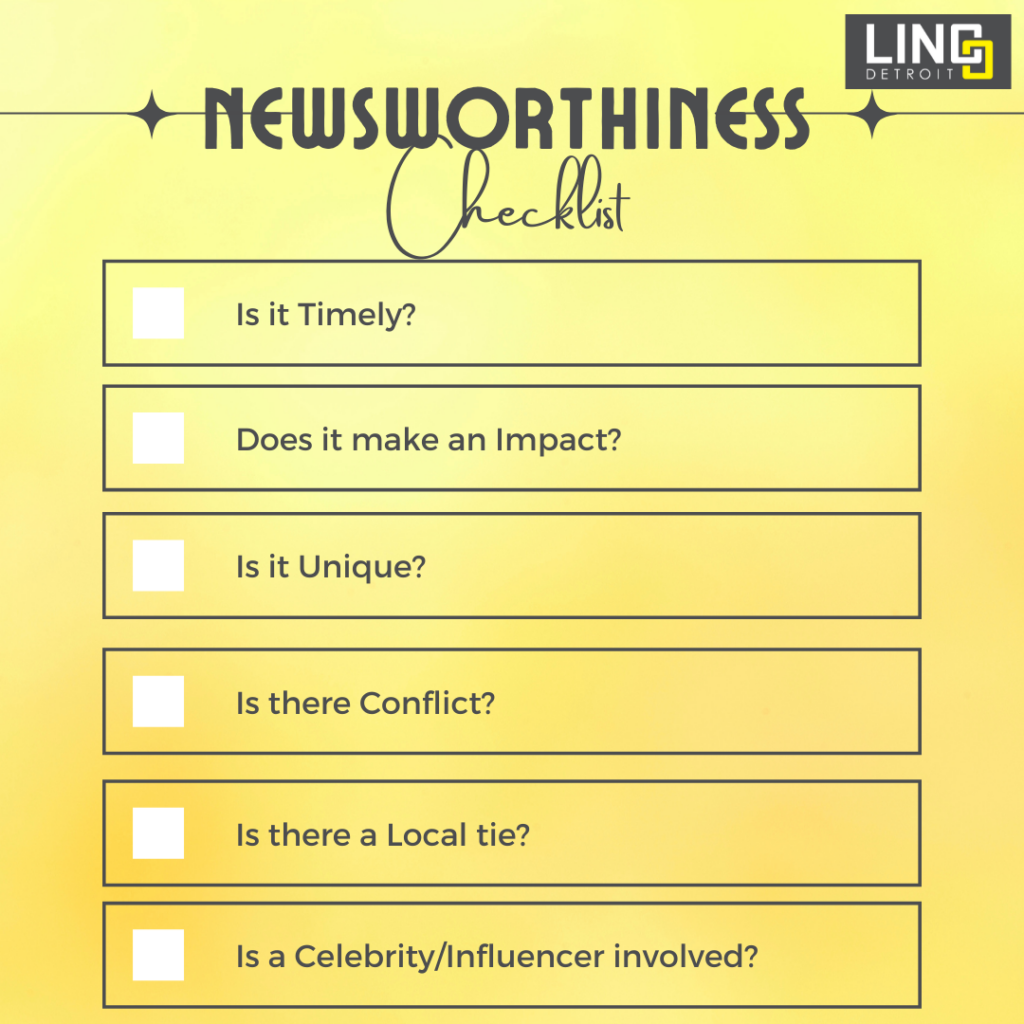
Use this checklist. Great stories usually hit at least two or more of these:
- Consequence: Is it important to the public in some way?
- Interest: Is it unusual, entertaining, or surprising?
- Timeliness: Is it recent or tied to something happening now?
- Proximity: Is there a local connection that matters to your audience?
- Prominence: Does it involve someone or something notable?
Understanding the Difference: Hard News vs. Soft News
To know how long PR will take, you also need to understand what kind of story you’re pitching.
Hard news is timely, impactful, and something journalists need to report on:
- A corporate takeover
- A major lawsuit or regulatory change
- A local teachers’ strike
Soft news is more feature-based or evergreen—it’s what audiences want to read:
- A new program launch
- The hiring of a celebrity spokesperson
- A behind-the-scenes look at company culture
Hard news may get coverage faster, especially if it’s urgent. Soft news takes longer, but it can be just as powerful when paired with the right strategy and timing.
Most PR coverage falls in the soft news category, especially for small businesses and startups. That’s why patience, persistence, and packaging matter so much.
The Real PR Timeline: What to Expect
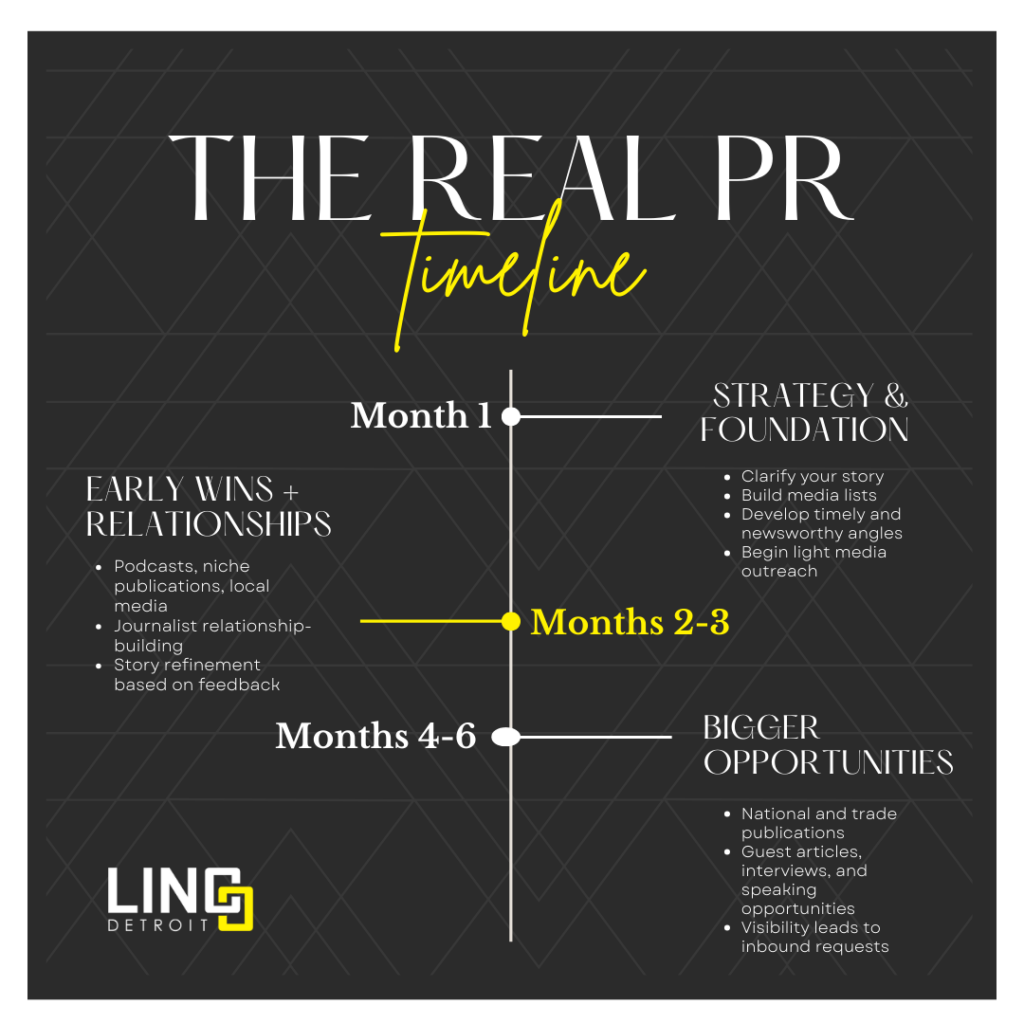
If you’re working with a strategic partner (and not just paying someone to fire off random press releases), here’s what a realistic timeline looks like:
Month 1: Strategy + Foundation
- Clarify your story
- Build media lists
- Develop timely and newsworthy angles
- Begin light media outreach
Months 2–3: Early Wins + Relationships
- Podcasts, niche publications, local media
- Journalist relationship-building
- Story refinement based on feedback
Months 4–6: Bigger Opportunities
- National and trade publications
- Guest articles, interviews, and speaking opportunities
- Visibility leads to inbound requests
Want to Get Coverage Faster? Start With the Right Message
If you’re sending out pitches but not getting bites, the problem usually isn’t the journalist; it’s the message.
That’s why your first step should be to clarify your story, your audience, and your angle.
Free Resource: The Key Message Workbook
Before we pitch anything for a client at LINC Detroit, we run it through our Key Message Workbook, and now you can, too.

Download it here to:
- Identify what makes your business actually newsworthy
- Refine your media angles using journalistic criteria
- Make sure your message is ready for press
The Bottom Line
If your PR strategy isn’t working, it’s probably not because you’re doing it wrong; it’s because you’re doing it too fast.
Effective PR is all about strategy, timing, and story. You have to earn media coverage. But when it lands, it’s worth so much more than a quick hit, it’s credibility.