Build Your Email List: A Step-by-Step Guide
If you run a business, you’ve probably heard the advice a thousand times: build your email list.
But most people get stuck because they think email marketing requires a full content strategy, design templates, and perfectly written campaigns before they even start.
It doesn’t.
In reality, building an email list is a series of small steps. Each one is simple. Together, they create an asset you actually own.
Here’s the process we recommend.
Step 1: Start the List
Before you think about content, design, or sending anything, start with the most important piece: the list itself.
Open Excel, Google Sheets, your notes app, or your CRM if you already have one. Begin adding names and email addresses for people already connected to your business.
This might include:
- Past clients
- Current clients
- Referral partners
- People who have expressed interest in your work
- Professional contacts you’ve collaborated with before
At this stage, the goal isn’t perfection. The goal is momentum.
Your email list is the one marketing asset you truly own. Social platforms change algorithms. Platforms disappear. Your list stays.
Step 2: Choose a Platform
Once your list reaches around 100 contacts, it’s time to move it into an email platform.
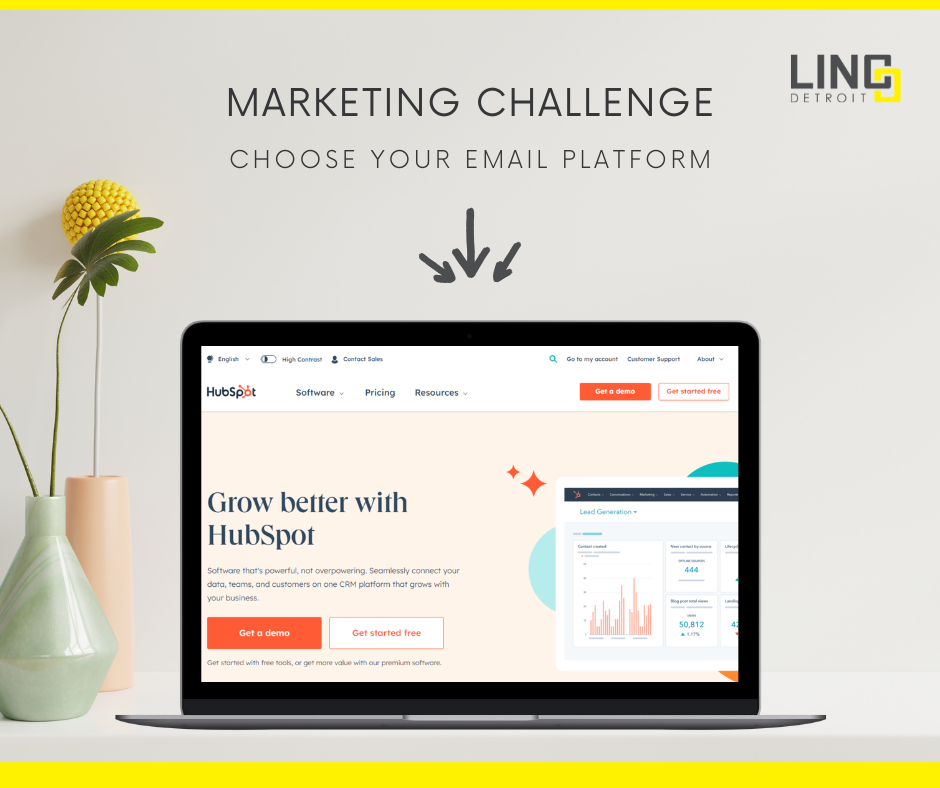
There are many options available, but we often recommend HubSpot because you can start for free and scale as your marketing grows.
Upload your list and make sure your contacts are stored somewhere you control. At this stage, you still don’t need to worry about writing emails or designing templates.
You’re simply creating the infrastructure.
Step 3: Create a Signup Link
The next step is giving people a way to join your list.
Most email platforms allow you to create a simple signup form and generate a shareable link. Once you have that link, start using it consistently.
Add it to your email signature. Include it in your LinkedIn profile. Place it in your Instagram bio or link-in-bio tool. Occasionally, share a post inviting people to join your list.
You don’t need a complex landing page or a lead magnet right away. A clear invitation and a simple signup form are enough to get started.
The key is making it easy for people to raise their hand and say they want to hear from you.

Step 4: Decide What Your Email Will Be
Before sending anything, define the format of your email.
This doesn’t require a detailed editorial calendar. Instead, focus on the structure. Ask yourself a few simple questions:
- Will this be a weekly email or a monthly roundup?
- Will the email have a name?
- Will it include recurring sections each time?
- Will there be a clear call to action?
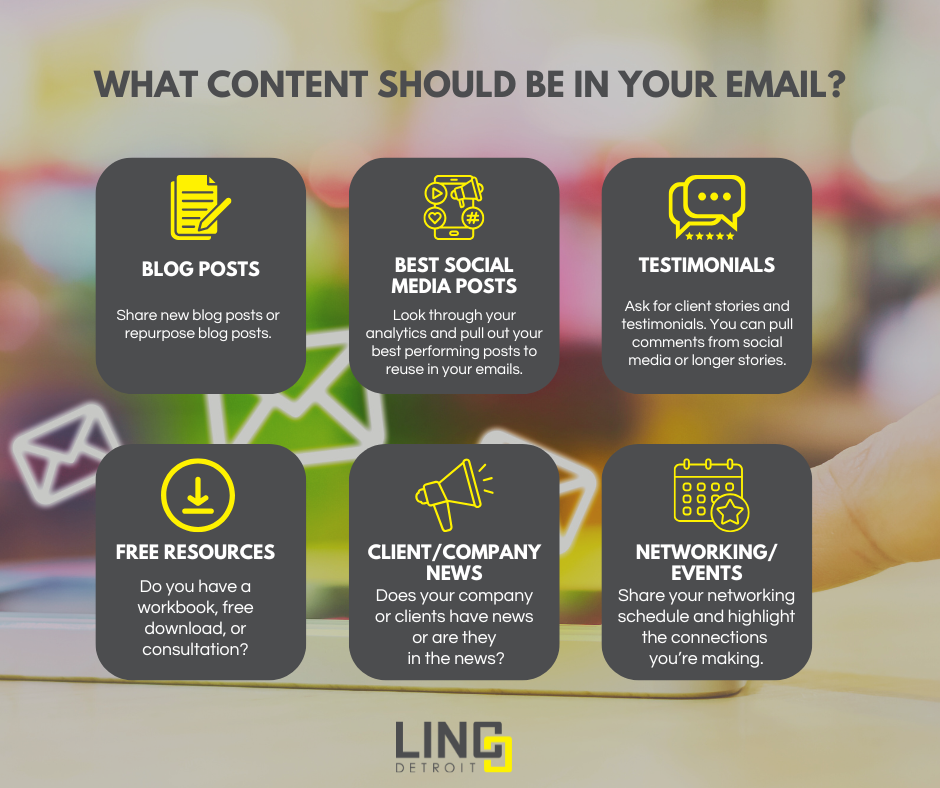
Many people assume they need new content for every email. In reality, this is one of the best places to repurpose the content you already create.
A strong LinkedIn post can become an email. A blog article can be summarized and shared with your list. A client insight or lesson learned can become a short, thoughtful note.
A repeatable structure will make sending emails easier and more sustainable.
Step 5: Send the First Email
Once the structure is defined, it’s time to send your first email.
This does not need to be a major announcement or a polished campaign. A simple introduction is enough.
Your first message might include:
- A quick hello
- A short explanation of what people can expect from your emails
- A link to a useful article or resource
- A clear next step, such as replying or visiting your website
The most important step is pressing send. Once you’ve sent the first email, the second becomes much easier.

Step 6: Commit to Consistency
Email marketing works best when it’s predictable.
That doesn’t mean you need to send emails every week. It means choosing a cadence you can realistically maintain.
For some businesses, that might be once a week. For others, it might be twice a month or once a month.
The exact schedule matters less than consistency.
Regular communication builds recognition. Recognition builds trust. And trust builds business.
Repurposing your best content will make this much easier to sustain.
Step 7: Create a Welcome Email
Once your list is growing and you’re sending emails consistently, set up an automated welcome message.
A welcome email is sent automatically when someone subscribes. It confirms they’re in the right place and gives them something valuable right away.
You don’t need to create something entirely new. Often, the best welcome email is simply an existing message that performed well.
Remove time-sensitive references, adjust the wording so it’s evergreen, and set it as your automatic introduction for new subscribers.
Now every new person joining your list receives a thoughtful message without any additional effort from you.
Step 8: Manage and Organize Your List
Finally, treat your email list like a database, not just a broadcast tool.
Some people will unsubscribe. That’s normal when you build your email list. A smaller, engaged list is more valuable than a large, inactive one.
Over time, begin organizing your contacts so you can communicate more effectively.
You might separate:
- Past clients
- Prospective clients
- Referral partners
- Highly engaged subscribers
This type of segmentation allows you to send more relevant messages in the future.
You don’t need to implement advanced segmentation immediately, but structuring your list correctly from the beginning will make it much easier to scale later.
Why Email Lists Still Matter
Most businesses don’t struggle with marketing ideas. They struggle with marketing systems.
An email list is one of the simplest systems you can build that grows in value over time.
When it’s structured correctly, your email list becomes:
- A relationship-building tool
- A consistent communication channel
- A platform for launching new services or ideas
- A long-term marketing asset you actually own
The steps are simple. The impact is significant.
And once the system is in place, it becomes one of the most reliable tools in your marketing strategy.
Prefer to Have This Built for You?
If you read this guide and thought, “This makes sense, but I don’t have time to set it up,” that’s exactly why we created the Start Smart program at LINC Detroit.
Start Smart helps businesses build the marketing infrastructure they need, including email list setup, signup systems, welcome emails, and a repeatable content structure, without having to figure it out themselves.
Instead of piecing things together, we build the foundation so your marketing can actually support your business growth.
👉 Learn more about the Start Smart program here.